

Sessile Oak - Tree of the Year 2014
The sessile oak (Quercus petraea), selected by the Board of Trustees as the Tree of the Year for 2014, is one of the native oak species, along with the English oak and the rarer downy oak. Its valuable wood and the importance of its acorns for pig farming led to its cultivation by humans in earlier times.
Erfahren Sie mehr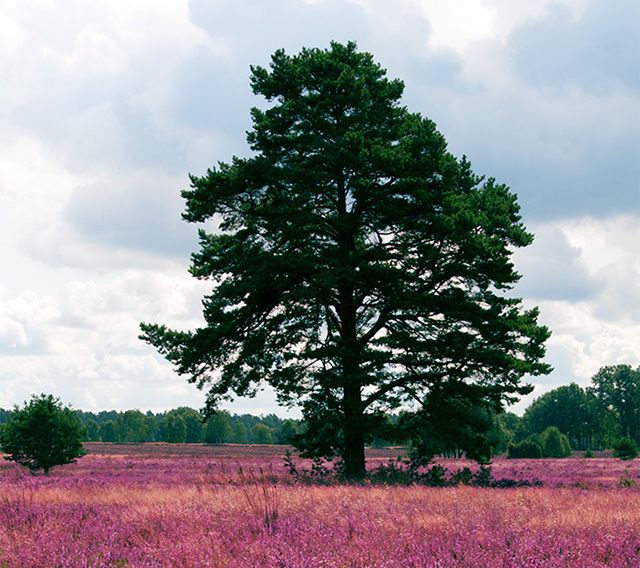
Hedgehogs—the spiky insectivores
Hedgehogs (Erinaceidae) are mammals. They eat all kinds of insects, but they also scoff at carrion and small vertebrates. With their short legs, hedgehogs are quite nimble. They have sharp claws, which they use to dig their resting places, lined with dry plant material.
Erfahren Sie mehr
Deers in Love in Traffic
As summer reaches its peak, the deer’s hormones really start to kick in! On muggy days, especially before and after thunderstorms, you can often see and hear the doe at the edge of golf courses. With her unmistakable chirping calls, she lures the buck. But female deer don’t just chirp seductively—to the bucks’ noses, they also smell beguilingly of “deer perfume.”
Erfahren Sie mehr
The Water Frog and His Complicated Family Life
It is grass-green to dark green, grows up to twelve centimeters long, and has dark spots on its back and often a light-colored dorsal stripe: the water frog! Its underside is white with gray marbling. To produce its loud croaking concerts, it has two whitish vocal sacs that it inflates at the corners of its mouth.
Erfahren Sie mehr
Top athletes on the golf course - the European hare
Adult hares weigh four to six kilograms. In summer, their fur is earth-brown; in winter, it is gray-brown. Their ears, which can grow up to 15 centimeters long, are particularly striking.
Erfahren Sie mehr
High-wire artist with a fluffy tail - The Squirrel
Their bushy tails are their most distinctive feature: squirrels (Sciurus vulgaris) are certainly among the best-known native rodents. “You can spot them everywhere these days: while walking in the park, at the cemetery, in the woods—and, of course, on the golf course.”
Erfahren Sie mehr
Cunning and sensitive—European garden spider
In the fall, the webs of canopy spiders hang in the meadows, shrubs, and trees like lost pieces of hair. The webs, which many golfers now spot in the roughs, resemble the gray hair of old women.
Erfahren Sie mehr
Beautiful and useful - Butterflies
Just like days at the beach and heat waves, butterflies—which adorn our golf courses as colorful, flying jewels—are a hallmark of midsummer. They emerge right on cue with the first warm rays of sunshine.
Erfahren Sie mehr
The White Stork – Elegance on Long Legs
When a white stork flies over the golf course, many people look up. With a wingspan of up to two meters, the bird is impossible to miss.
Erfahren Sie mehr